Investor Guide · October 2026
The EGX's Roughest Week Since 2021: What the Sell-Off Means for Your Savings
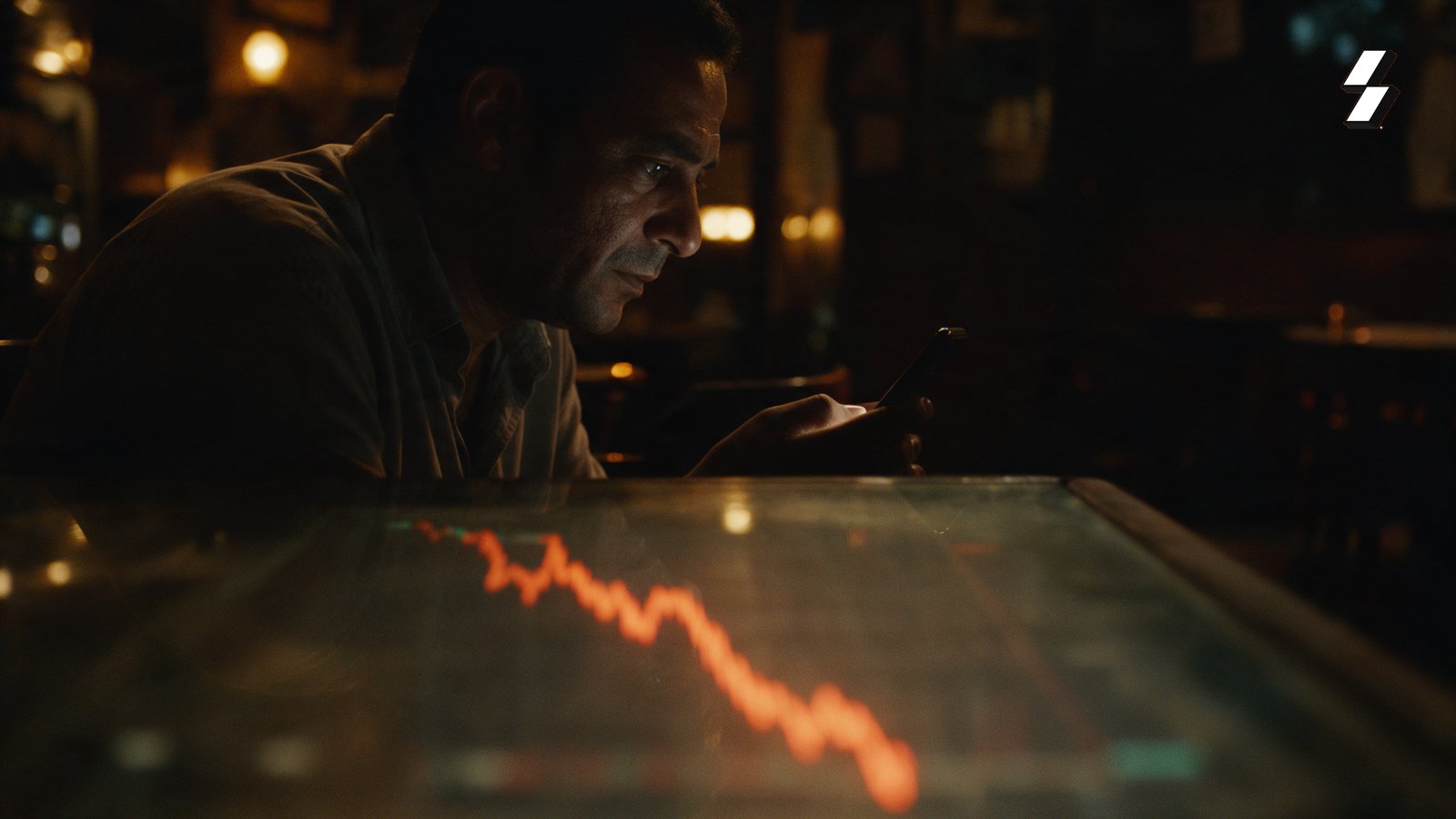
If you hold Egyptian shares, the last week of October was hard to watch. Between Wednesday 21 and Monday 26 October the EGX30 lost about 8.4%, smaller companies fell further, and on Sunday the exchange stopped trading altogether for half an hour. Weeks like this are when people make their most expensive decisions, usually in a hurry. So here is a calm account of what happened, what drove it, and what it says about building savings that do not depend on a screen.
What happened, day by day
Thursday 22 October: the EGX30 fell 3.41% to 51,052 points, and the total value of listed companies slipped below EGP 4 trillion.
Sunday 25 October: the sharpest day. The broader EGX100 index hit its 10% loss limit, which triggered a 30-minute suspension of the whole market, the first since 2021. The EGX30 closed 3.56% lower at 49,234 after touching 48,268 during the session. The EGX70, which tracks small and medium companies, fell about 11%. Of 224 shares that traded, 209 closed lower.
Monday 26 October: a third straight fall. The EGX30 lost another 1.66% to close at 48,416.94, its lowest close since April. Since the previous Wednesday the index was down about 8.4%, and roughly EGP 334 billion of market value had disappeared.
Why it happened
Hany Genena, head of research at Al Ahly Pharos, put it down to escalating regional and international political and economic uncertainty, which encouraged investors to take profits after several years of strong gains.
The currency added pressure. The pound weakened past EGP 56 to the dollar for the first time, with the Central Bank of Egypt quoting about EGP 56.35 to sell on 26 October, and the dollar up almost 8% since late September. Foreign and Arab investors sold roughly USD 1.84 billion of Egyptian government securities between 19 and 22 October. When foreign money heads for the exit, it tends to leave through the most liquid doors first: treasury bills, then shares.
Not everything was falling. On the same days, Banque du Caire's share offering was priced at the top of its range and was several times oversubscribed. Demand for quality assets did not vanish. Prices simply moved faster than anyone's patience.
Five years of context
A bad week can hide a good decade. In October 2021 the EGX30 stood at around 11,100 points. Even after this sell-off it is above 48,000. Someone who bought then and held on is still far ahead in pounds.
That is the honest case for stocks: over long periods they can grow strongly. The honest case against relying only on them is weeks like this one, when a fifth of a small-cap portfolio can vanish in a single session and the only way to stop the pain is to sell at the worst possible price.
Why property does not have a week like this
A listed share has a price every second the market is open. That is useful when you want to sell, and brutal when everyone else wants to sell too.
A share in a leased commercial unit works differently. On Amtaar, each property is valued by an independent third-party valuer certified by Egypt's Financial Regulatory Authority (FRA). The first revaluation takes place after the first year of investment, and from then on the property is revalued every six months. The share price follows that valuation, not a ticker. There is no screen turning red at 11 a.m. because someone in another country is nervous.
That does not mean property values cannot fall. A valuation can come in lower, and a unit can sit between tenants. But the price is set by the value of the building and its lease, not by how many people panicked that morning. And while you hold it, the tenant keeps paying rent, which is distributed quarterly in the first week of January, April, July and October.
The trade-off is liquidity, and it is worth being clear about it. Amtaar shares can be sold after the first year, either to a buyer you find yourself, with no commission, or on the secondary market at a price based on the latest independent valuation, with a 0.5% commission from the seller and 0.5% from the buyer. Property is for money you do not need next week.
What to do in a week like this
Do not sell in a panic just to make the feeling stop. If your reasons for owning a company have not changed, a falling price alone is rarely a good reason to leave.
Do look at how much of your savings depends on one market. If a single bad week can change your plans for the year, your money is probably too concentrated.
And do give part of your portfolio a different engine: an asset whose return comes from rent paid by a business tenant, valued by an independent professional, and owned under a signed contract. You can start from a single share, so this is not an all-or-nothing switch. It is a second leg to stand on.
The bottom line
The October sell-off is a reminder, not a verdict. Stocks can recover, and many analysts expect them to once regional tensions ease, though nobody can promise when. What the week shows is the value of owning something whose price does not move every time the news does.
Amtaar Capital for Financial Investments is licensed by Egypt's Financial Regulatory Authority to promote and underwrite securities subscriptions. The minimum investment varies by offering and is shown on each property inside the Amtaar app. Market figures are as reported between 22 and 27 October 2026. This article explains general principles and is not investment advice.
Questions investors ask
How much did the Egyptian stock market fall in October 2026?
The EGX30 fell about 8.4% over three sessions between 22 and 26 October 2026, closing at 48,416.94 on 26 October. The small-cap EGX70 fell about 11% on 25 October alone.
Why was trading on the EGX halted?
On 25 October 2026 the EGX100 index fell 10%, which triggers an automatic market-wide suspension. Trading stopped for 30 minutes, the first market-wide halt since 2021.
Can the value of a fractional property share fall too?
Yes. A property's independent valuation can come in lower, and rent pauses if a unit is vacant. But the price is not set minute by minute by market sentiment: on Amtaar it follows an independent FRA-certified valuation, done after the first year and then every six months.
Should I sell my shares and buy property?
That depends on your goals and is not something an article can decide. The general principle is diversification: holding part of your savings in an income-producing asset with a different price mechanism means one bad week in one market affects only part of your money.

