Investor Guide · October 2026
Is Fractional Real Estate a Good Investment? An Honest Look at the Pros, the Cons and Who It Suits
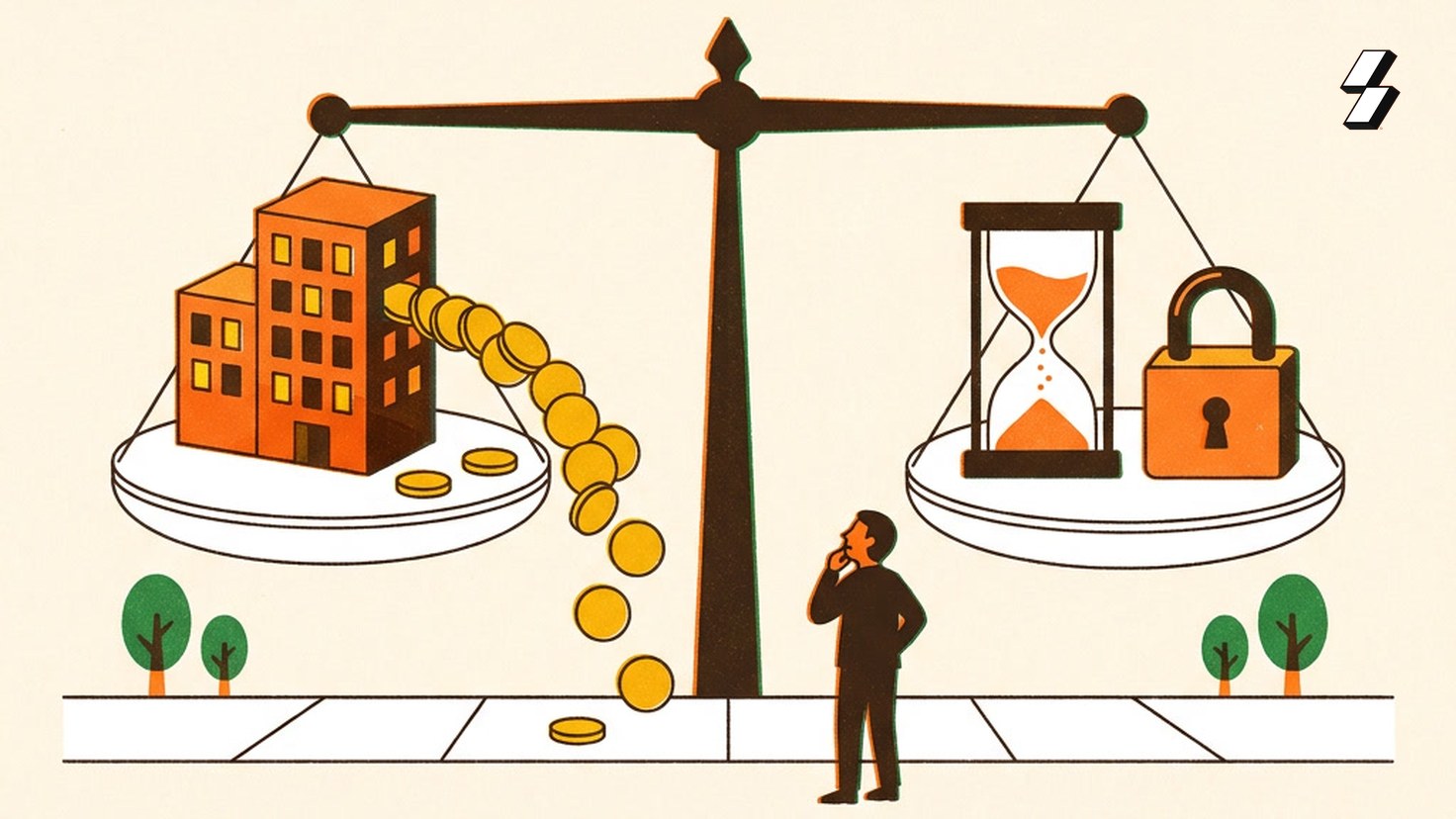
Few investment ideas have spread as quickly as fractional real estate, and few questions come up as often as the simplest one: is it actually a good investment? The honest answer is that it depends on what you need the money to do. Fractional ownership fixes several of the oldest problems with property investing, and it brings trade-offs of its own. This guide sets out both plainly, so you can decide for yourself.
What you are actually buying
When you invest in fractional real estate you buy shares in a specific property and own a percentage of it. Your return comes from two places: your share of the net rent the property collects, and your share of any rise in its value when it is sold. On Amtaar, rent is distributed quarterly on 1 January, 1 April, 1 July and 1 October.
So the question “is it a good investment?” really asks two things: is the property itself a good asset, and is the fractional structure a good way to hold it? The first depends on each property. The second is what this guide is about.
The advantages
A lower entry point: instead of millions for a whole office, you start with one share. On Amtaar, the unit open now, Park Street East, is EGP 50,000 per share.
Income from the start: a share of a finished, leased property earns rent from the first full month you hold it, instead of years of instalments on an off-plan unit that earns nothing until handover.
Diversification: the same budget can be spread across several properties, developers and districts, so one vacancy or one weak market does not decide your whole return.
No landlord work: finding tenants, collecting rent and handling the paperwork are done for you. You see the result in your wallet.
Access to commercial property: offices in established business parks, usually out of reach for individuals, become available in small pieces.
The drawbacks
Less control: you co-own the property with other investors, so you do not decide alone when to sell, whom to lease to or how to manage it.
A slower exit: real estate is not a bank deposit. On Amtaar you can sell after the first year, either to a buyer you find yourself or through Amtaar's secondary market, but finding a buyer takes time and the price depends on the market.
Returns are not guaranteed: rent depends on the tenant paying, and capital gain depends on the property market. Forecasts are projections, not promises.
Fees: Amtaar charges a 2.5% commission when you invest and a 5% management fee on rent. They pay for sourcing the property, the legal work and the management, and you should count them in your expectations.
Who it suits, and who it does not
It tends to suit people who want steady income from property, have savings they will not need for several years, and prefer not to manage tenants. It also suits people who already own a home and want to add property income without taking on another whole unit.
It is a poor fit for money you may need at short notice, such as an emergency fund, or for anyone looking for a guaranteed return. Betting on quick price jumps is also the wrong use: the model is built around rent.
A simple test before you invest
Ask yourself four questions. Can I leave this money invested for at least a few years? Am I comfortable that the return depends on rent and the market, not a fixed rate? Do I understand what I own and how I would sell it? Is this one part of my savings rather than all of it?
If the answer to all four is yes, fractional real estate is worth a serious look. Start with one property, read its page and contract, and add more as your confidence grows.
Questions investors ask
Is fractional real estate a good investment?
It can be, for medium- to long-term money. It offers rental income, diversification and a low entry point, but exits are slower than stocks or deposits and returns are not guaranteed.
Can you lose money in fractional real estate?
Yes. If a property loses value or a tenant stops paying, your return falls and the value of your shares can go down. Spreading your money across several properties reduces that risk but does not remove it.
How much do I need to start?
One share. On Amtaar the price depends on the property. Park Street East, open now, is EGP 50,000 per share.
How quickly can I get my money back?
On Amtaar you can sell after the first year, to a buyer you find or through the secondary market. How fast depends on finding a buyer, so treat it as a medium- to long-term investment.
Is fractional real estate better than buying an apartment?
It depends on your goal. A whole apartment gives you full control and a home you can use. Fractional ownership gives you rental income from commercial property, diversification and no landlord work, for much less capital.