Investor Guide · July 2026
The World Cup Ripple Effect: Why Global Sports Infrastructure Is Quietly Re-Routing Capital into Cairo's Commercial Real Estate
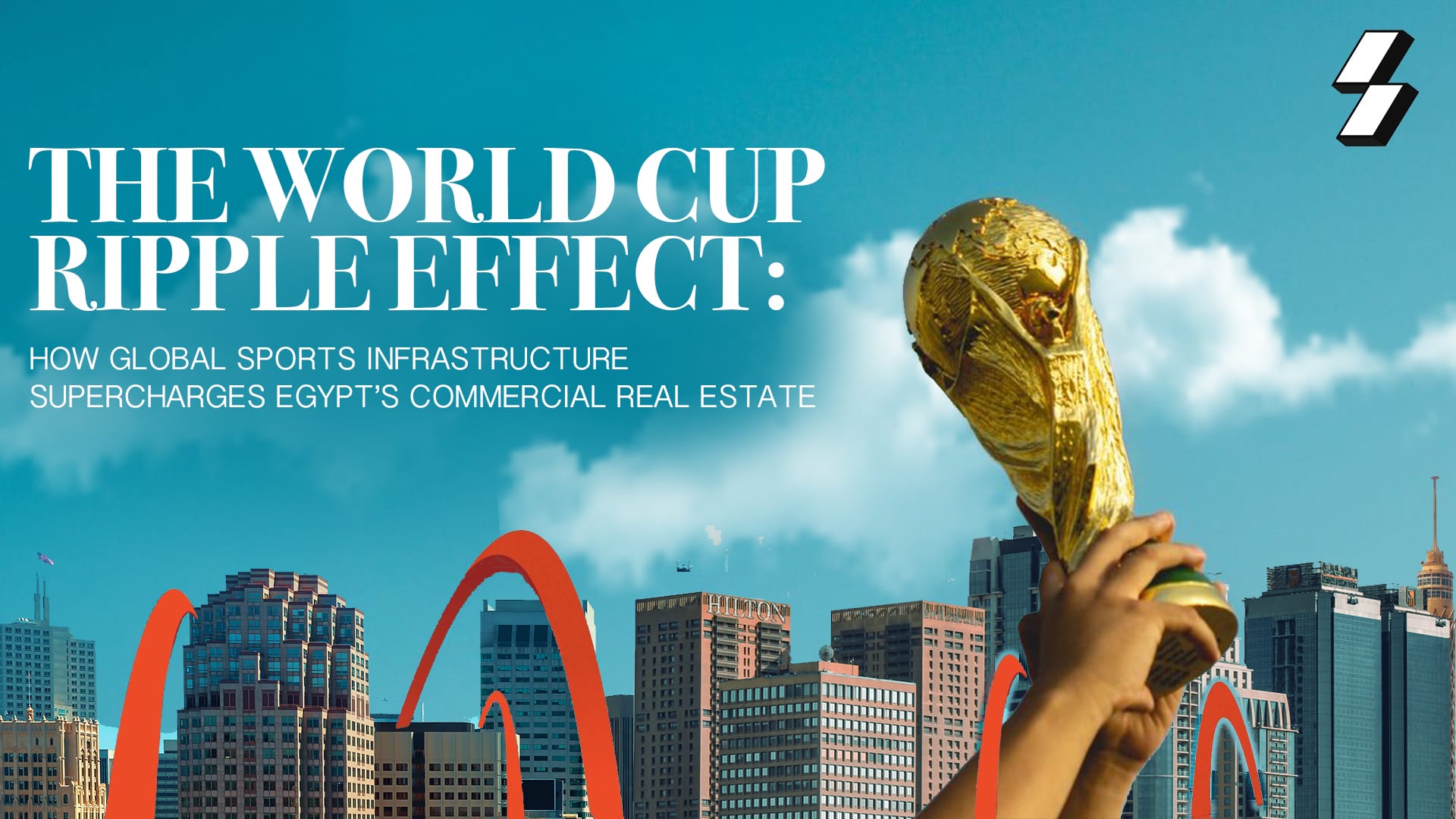
When most professionals look at the FIFA World Cup, they see a sporting spectacle. When macro-economists and commercial real estate (CRE) investors look at it, they see a massive catalyst for cross-border capital reallocation. The financial footprint of a mega-event extends far beyond the borders of the host nation — and even when Egypt is not a direct host, the regional economic ripples reshape our local property landscape, specifically within New Cairo and the New Administrative Capital. Here is a breakdown of the macro trends driving this shift, and how the mechanics of property access are fundamentally changing.
1. The Gulf Capital Recycling Effect
When regional neighbours experience massive economic windfalls from hosting or sponsoring global tournaments, that surplus liquidity seeks stable, high-yield international destinations. Egypt has become a primary beneficiary of this trend.
We are seeing a structural evolution: Gulf liquidity is pivoting away from speculative, seasonal land purchases on the coast and moving directly into permanent, year-round commercial growth in Egypt's primary economic engines. This institutional cash injection heavily capitalizes construction pipelines, directly elevating the baseline valuation of premium offices, retail spaces, and clinics in urban hubs.
2. The Commercial Evolution of the 'Sports City' Playbook
World Cup hosts succeed by turning temporary sporting infrastructure into permanent, year-round economic ecosystems. Egypt is actively deploying the same urban-planning playbook.
Developments like the integrated Olympic Sports City in the New Administrative Capital and specialized sports districts in New Cairo are transforming these zones into high-security corporate environments. These projects attract global hotel franchises, corporate headquarters, and high-foot-traffic retail brands.
For commercial real estate, these master plans insulate assets from localized market corrections by creating a built-in, permanent catchment area of corporate consumers.
The Shift to Fractional Allocation
Historically, capitalizing on these high-yield institutional corridors required massive capital outlays, navigating complex legal frameworks, and absorbing significant vacancy risk. In a high-inflation environment, holding idle cash is a guaranteed loss — yet purchasing an entire commercial building is unfeasible for most corporate professionals and mid-tier investors.
This friction is driving the rapid rise of fractional commercial real estate investment in Egypt. Instead of buying entire buildings, market participants now purchase premium, cash-flowing commercial properties by the meter. Platforms like Amtaar are institutionalizing this space by securing Financial Regulatory Authority (FRA) licensing, allowing individuals to enter premium commercial assets in New Cairo and the New Capital starting from EGP 50,000.
By targeting already-delivered, corporate-tenanted assets, investors capture steady quarterly rental yields and long-term capital appreciation without the traditional operational headaches.
The Bottom Line
The macro forces moving global capital into Cairo's commercial hubs are gaining momentum. The investors who win this cycle won't be those waiting for a massive capital windfall — they'll be the ones who learn to allocate fractionally, early, and securely.