Investor Guide · October 2026
Common Ownership (Al-Shuyu'): The Legal Basis of Fractional Real Estate in Egypt
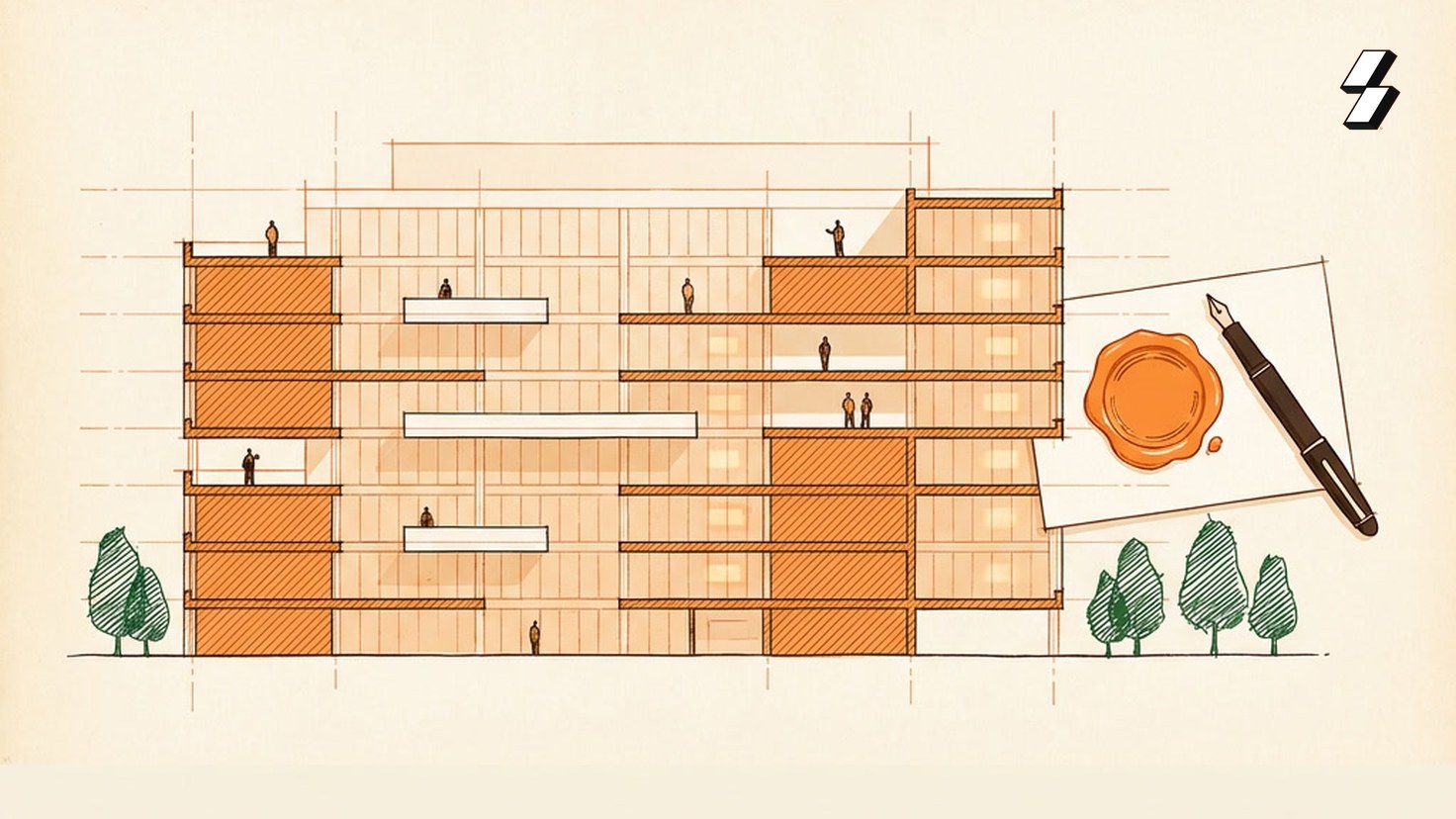
When people first hear about fractional real estate, one question comes up quickly: is owning part of a property actually a legal right, or just a promise from a platform? In Egypt the answer lies in a long-established part of the law. The Civil Code recognises common ownership, known as al-shuyu' (الشيوع), in which several people own one undivided property, each with a defined share. Families have held inherited property this way for generations. Fractional real estate applies the same legal idea to investment.
What common ownership means
Article 825 of the Egyptian Civil Code sets out the principle: when two or more people own a thing without each person's portion being separated out, they are co-owners in common (شركاء على الشيوع), and their shares are presumed equal unless shown otherwise. In other words, you can own a defined percentage of a whole property without owning a specific room or floor of it.
It is the same arrangement that applies when heirs inherit a building together: each heir owns a share of the whole, not a marked-off part of it. Fractional real estate uses the arrangement on purpose, with shares sized for investment.
What your share gives you
Article 826 states that each co-owner owns their share fully, may dispose of it, may take its proceeds (its “fruits”, such as rent) and may use it, provided this does not harm the rights of the other co-owners.
For a fractional investor that means three practical rights: your share is your property, you are entitled to your portion of the rent, and you can sell your share. Decisions on the ordinary management of the property follow the majority of the co-owners, calculated by the value of their shares, which is why a professional manager handling leasing and administration for all the owners is central to the model.
How Amtaar documents your ownership
On Amtaar, every investment is in a specific, named unit. When you buy shares, you sign a common-ownership share-sale contract (عقد بيع حصص على الشيوع) for that unit, stating the number of shares you hold and your exact percentage of the property. Once approved, your signed contract is kept in the app under Profile → Property Contracts, where you can view or download it at any time.
Amtaar manages the property on behalf of the co-owners: it leases the property to a tenant, collects the rent and distributes each owner's share quarterly, on 1 January, 1 April, 1 July and 1 October, after a 5% management fee.
Selling your share
Because each co-owner owns their share outright, they can sell it. On Amtaar you can sell after the first year: if you find a buyer yourself, Amtaar transfers the ownership with no commission. Otherwise Amtaar sells your shares on the secondary market at the market price at that time, with a 2.5% commission.
The buyer steps into your position as a co-owner, with the same right to their share of the rent.
Regulation on top of the law
Civil law defines what you own. Financial regulation governs how investments are offered to the public. Amtaar Capital for Financial Investments is licensed by Egypt's Financial Regulatory Authority (FRA) to promote and underwrite securities subscriptions, and investors verify their identity before they can invest.
Together, the two give a fractional investor something concrete: a legally recognised share of a real property, documented in a contract and offered by a licensed company. This article explains general principles and is not legal advice. Read your own contract and seek advice if you need it.
Questions investors ask
Is fractional property ownership legal in Egypt?
Yes. Egypt's Civil Code recognises common ownership (الشيوع), in which several people own one undivided property, each with a defined share. Fractional real estate applies this to investment property.
What rights does a co-owner have under Egyptian law?
Under Article 826 of the Civil Code, each co-owner fully owns their share, may sell or otherwise dispose of it, and is entitled to its proceeds such as rent, without harming the other co-owners' rights.
Do I own a specific part of the building?
No. You own a percentage of the whole unit, not a marked-off part of it. That is what common ownership means.
What document proves my ownership on Amtaar?
Your common-ownership share-sale contract for the specific unit, stating your number of shares and your percentage. It is kept in the app under Profile → Property Contracts.