Investor Guide · October 2026
Fractional Ownership Is Not a Timeshare: The Difference Every Investor Should Know
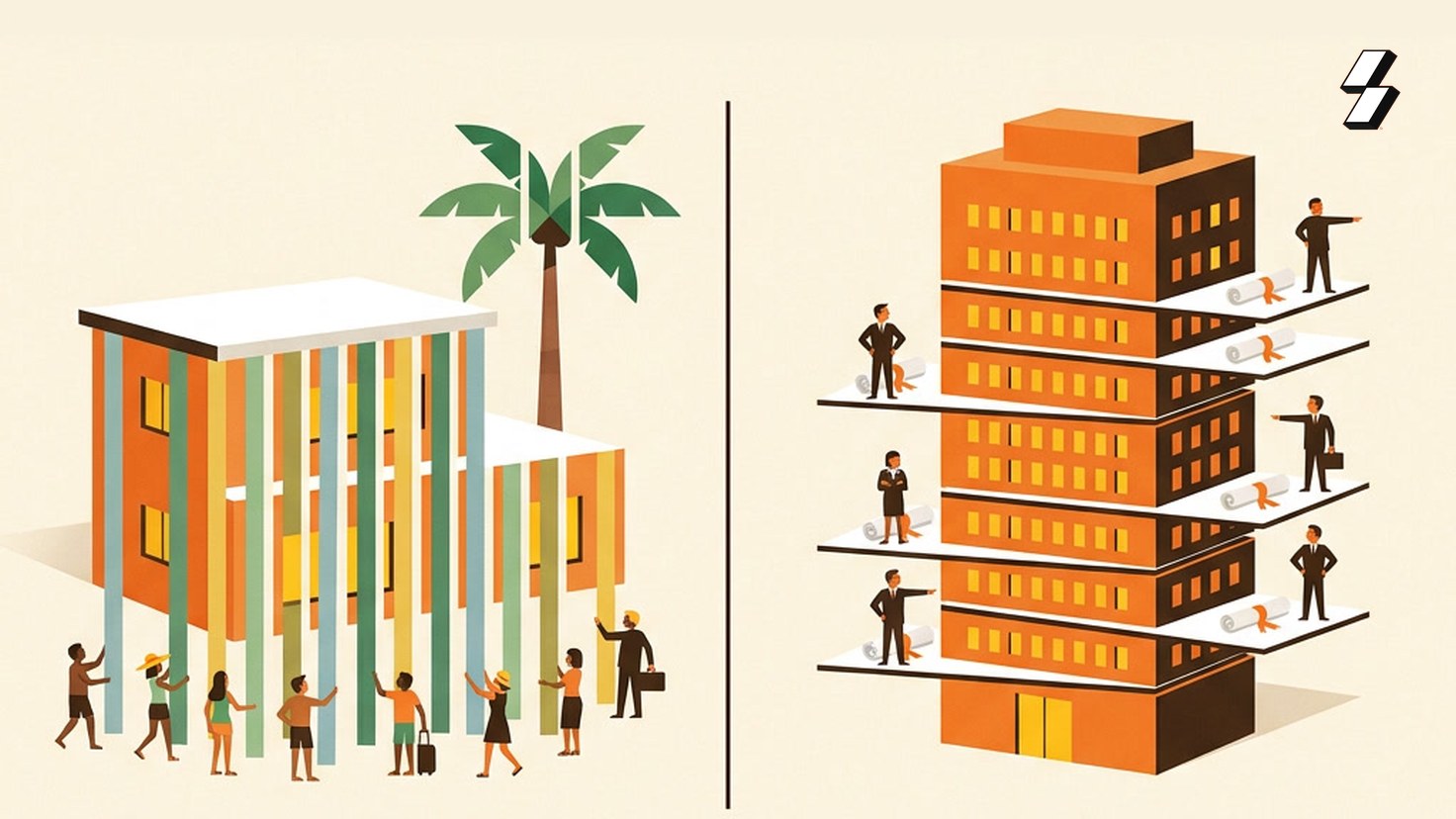
Mention fractional real estate and someone will usually ask whether it is like a timeshare. It is a fair question: both involve many people sharing one property, and timeshares have earned a poor reputation in many markets. But the two are built on opposite ideas. A timeshare sells you time to use a property. Fractional investing sells you a share of the property itself and of the income it earns. Here is the difference, point by point.
What a timeshare is
A timeshare divides access to a holiday property by time. Buyers typically pay an upfront price for the right to stay in a resort unit for a week or two each year, plus annual maintenance fees that tend to rise over time. In many structures the buyer owns a right to use the property, not a share of the property itself.
Timeshares are built for holidays, not income. The owners use the unit in turn, so it earns them no rent, and the costs continue every year whether they use their week or not. That is why resale is often difficult: buyers are hard to find for something that costs money and earns none.
What fractional real estate is
Fractional real estate divides ownership, not time. Investors buy shares in a property and own a percentage of it. The property is leased to a tenant, and the net rent is shared between the owners according to their shares. Nobody uses the property personally: it is an investment asset.
On Amtaar, each property is a leased commercial office. Investors sign a common-ownership share-sale contract stating their percentage, and receive their share of the net rent every quarter, on 1 January, 1 April, 1 July and 1 October.
The differences, point by point
What you buy: a timeshare buys time to use a property. Fractional investing buys a share of the property.
Money flow: a timeshare costs you maintenance fees every year. A fractional investment pays you your share of the rent.
Purpose: a timeshare is for personal holidays. A fractional property is for income and long-term value.
Type of property: timeshares are usually resort units. Fractional investment platforms such as Amtaar focus on leased commercial property.
Selling: a timeshare is often hard to resell. A fractional share is a stake in an income-producing asset, and on Amtaar you can sell after the first year to a buyer you find or through Amtaar's secondary market.
Where the confusion comes from
Both models split one property among many people, and both use words like “shared” or “fractional”. Some holiday products are even marketed as “fractional ownership” of a villa with usage weeks attached. The test is simple: ask whether you are buying use of the property or ownership of it, and whether it pays you or charges you each year.
If the answer is ownership and income, you are looking at fractional real estate investment. If it is use and annual fees, it is a holiday product, whatever it is called.
Questions to ask about any fractional offer
What exactly do I own, and what document proves it? Is the property leased, and to whom? How and when is rent paid, and what fees are deducted? What will it cost me each year beyond those fees? How do I sell, and to whom?
A sound fractional investment answers all of these clearly before you pay. Amtaar shows each property, its developer, size and forecast in the app, and your ownership is stated in your contract.
Questions investors ask
Is fractional ownership the same as a timeshare?
No. A timeshare sells the right to use a holiday property for a period each year. Fractional real estate sells ownership of a percentage of a property and a share of its rent.
Do fractional investors pay annual maintenance fees like timeshare owners?
Not in the timeshare sense. On Amtaar, a 5% management fee is deducted from the rent the property collects before it is distributed, instead of a bill you pay each year.
Can I stay in a property I own a fractional share of?
No. Fractional investment properties are leased to tenants to earn rent. Amtaar's properties are commercial offices leased to businesses.
Why are timeshares hard to sell?
Because they cost the owner money every year and earn no income, so few buyers want them. A share in a leased property earns rent, which gives it value to the next buyer.